
Introduction
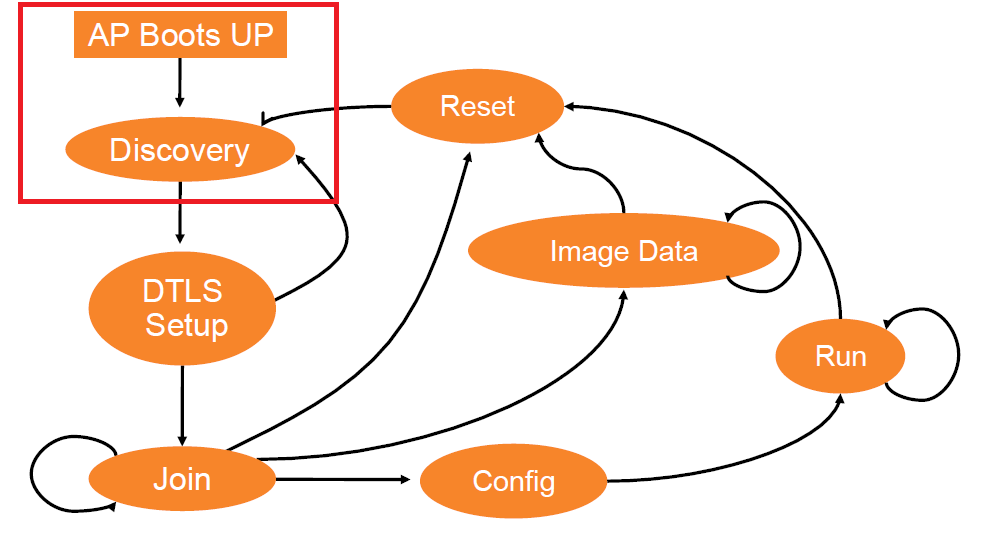
- The Clear Config Indication message is sent by an AC to request that a WTP reset its configuration to the manufacturing default configuration. The Clear Config Indication message is sent while in the Run CAPWAP state. The Clear Config Indication message carries no message elements. When a WTP receives a Clear Config Indication message it resets.
- To clear the AP private config-AP0022.9090.e859#clear capwap private-config. AP0022.9090.e859#show capwap client config. Normally, if the AP cannot find a controller to join, it will automatically reboot. To prevent it from rebooting,-AP0022.9090.e859#debug capwap cli no-reload. Prior to configuring the AP: Before the Access Point will.
This document explains how to manually set or reset static configuration information on IOS and ClickOS Access Points (APs)
How to restore the factory settings on a Cisco Access Point 1. Through the CLI via console or SSH: login to the AP using Cisco/Cisco! Debug capwap console cli! Delete /force flash:lwappmmmwarhash.cfg delete /force flash:lwappreap.cfg delete /force flash:lwappnonapspecificreap.cfg delete /force nvram:private-config clear capwap private-config! Erase /all nvram:! Reload If you want. Clear capwap private-config clear lwapp private-config reload; If the above does not work, check the wireless controller logs by navigating to ManagementLogsMessages Logs in the WLC GUI to see if you can determine if the wireless controller is seeing the AP trying to associate with it. From the AP console, clear the LWAPP (CAPWAP) configuration: ap#clear lwapp private-config. You can now enter the 'lwapp ap' 'Ease of Deploy' CLI commands. Workaround 2: 1. Disconnect the AP from the LAN (e.g. Shutdown the switchport) 2. Ap#debug lwapp console cli (use 'debug capwap console cli' if running 5.2 or above) 3.
Prerequisites
Requirements
Cisco recommends that you have knowledge of these topics:
Basic knowledge of the configuration of CAPWAP APs and Cisco Wireless LAN Controllers (WLC)
Basic knowledge of Control And Provisioning of Wireless Access Points protocol
Components Used
The information in this document is based on these software and hardware versions:
Cisco 5520 WLC that runs firmware release 8.8.111.0
Cisco AIR-CAP3702I-E-K9 Series AP
- Cisco AIR-AP4800-E-K9 Series AP

The information in this document was created from the devices in a specific lab environment. All of the devices used in this document started with a cleared (default) configuration. If your network is live, make sure that you understand the potential impact of any command.
Conventions
Refer to Cisco Technical Tips Conventions for more information on document conventions.
Manually configure the AP
In a new installation, when an AP is unable to find a WLC using the discovery algorithms, you can statically configure the information necessary to join a controller via the console port and the AP’s Command Line Interface (CLI). Refer to Lightweight AP (LAP) Registration to a Wireless LAN Controller (WLC) for more information on the WLC discovery algorithms and the LAP registration process.
In order to manually configure static information on a LAP using the AP CLI interface, you can use these EXEC mode CLI commands:
- For IOS based APs:
- For ClickOS based APs:
Note: You must issue these commands while in enable mode. The default enable password is Cisco.
The static information configured with the CLI commands is used by the AP to join a controller. After joining the controller, the user can configure new settings on the LAP via the controller.
Reset the LWAPP Configuration on the LAP
When you move your AP to a different location in your network and the LAP cannot join the previous WLC, or if you want to manually reconfigure the AP to join another WLC, you have to enter the new controller information in order to allow your AP to associate with a different controller.
Reset LAP through WLC
In addition to the previous methods, you can also reset the configuration of the LAP from the WLC. When the LAP is registered to the controller, you can use these commands from the controller in order to reset the configuration on the LAP:
Use clear ap config <ap-name> keep-ip-config command in order to clear all of the AP's configurations to default, except for the AP's static IP configuration.
Use clear ap config <ap-name> command in order to clear all of the AP's configurations to default, which includes the AP's static IP configuration.
Reset LAP through CLI
In order to use that method you need to login to AP console mode in priviledge exec mode:
- For IOS based APs:
- For ClickOS based APs:
Reset LAP through with reset button.
In order to use that method you need to have physical access to AP. Process is the same for both IOS and ClickOS APs.
- Disconnect power from AP.
- Press and hold 'Mode button' on AP and provide power to AP.
- Keep mode button hold for 20seconds or more.
- On IOS based APs:

- On ClickOS based APs:
How to Disable the Reset Button on the AP Registered to the Controller
In order to disable the reset button on the AP registered to the controller, use this CLI command:
Troubleshoot
You can use this debug command on a LAP with a console port to troubleshoot problem related to IP address assignment:
- On IOS based APs:
- debug ip udp
- On ClickOS based APs:
- debug dhcp events
- debug dhcp errors
- debug dhcp packets
Note: If the AP has no console port, it is necessary to take a wired sniffer trace of the port that the LAP is plugged into to see what packets are being received by and transmitted to the LAP.
You can use these debug commands in order to monitor the discovery process through the WLC CLI.
On IOS and ClickOS based APs:
- debug capwap client events
- debug capwap client errors
- debug capwap client detail
How to restore the factory settings on a Cisco Access Point
1. Through the CLI via console or SSH:
- login to the AP using Cisco/Cisco